Clinical nerve-root patterns
Movement, sensation, reflexes, and radiating symptoms can help identify a possible nerve-root pattern. Neighboring roots overlap, so no single symptom proves a level.

Interactive spine nerve chart
Select a spinal level to see its nerve pathway, innervation and body-area associations, movement, sensation, and possible findings.
Tap a level to begin
Search by vertebral level, body area, movement, or possible symptom pattern.
Interactive spine
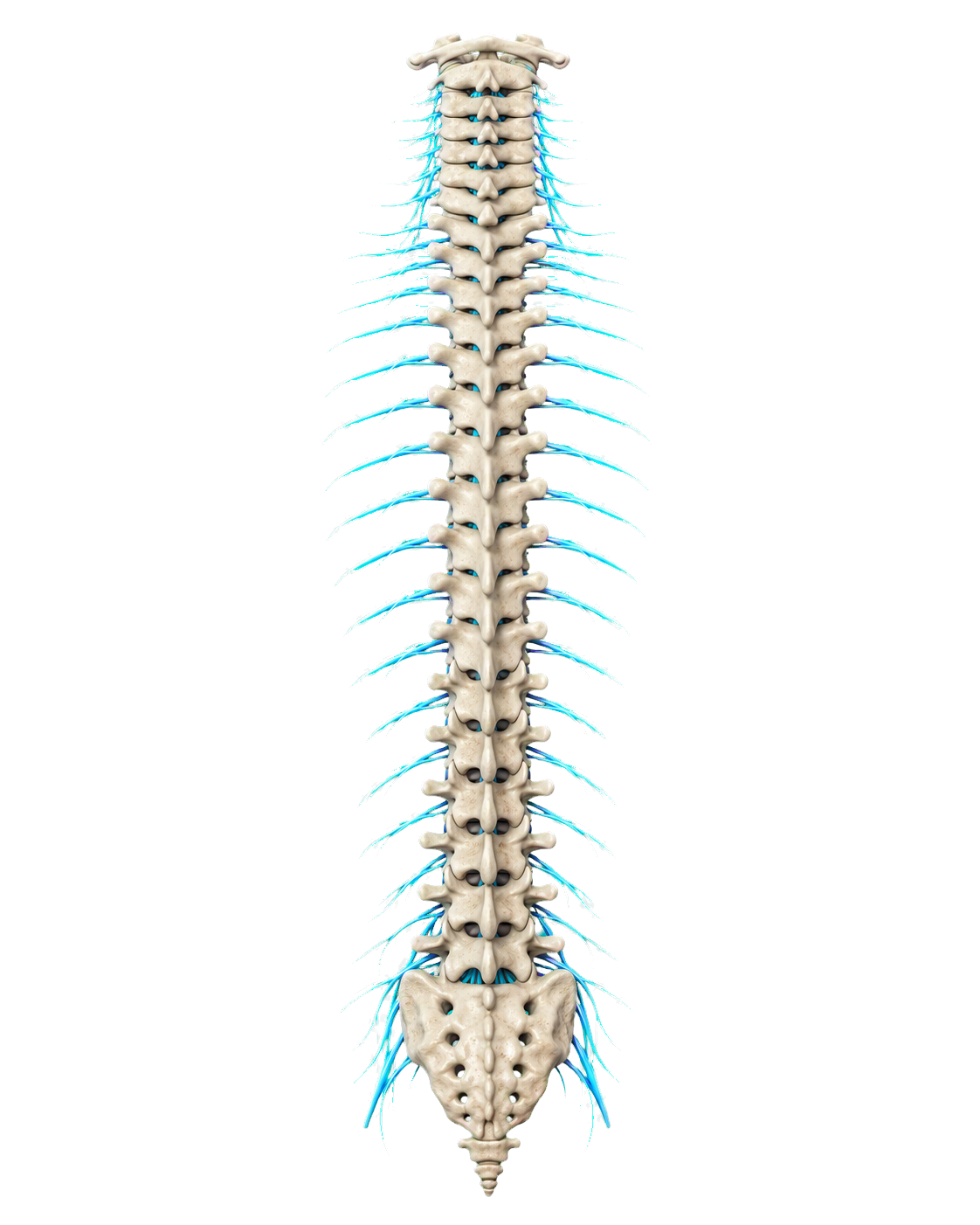
C8 is a nerve root at the C7–T1 junction; there is no C8 vertebra.
Read the map correctly
Movement, sensation, reflexes, and radiating symptoms can help identify a possible nerve-root pattern. Neighboring roots overlap, so no single symptom proves a level.
The innervation and body-system lists summarize the supplied traditional chiropractic chart. They are educational associations, not proof that one spinal level caused an organ condition.
History, orthopedic and neurologic testing, movement, posture, and imaging when appropriate help determine what is actually driving a symptom.
Important safety note
Seek urgent medical care for sudden or progressive weakness, loss of bladder or bowel control, saddle numbness, major trauma, breathing difficulty, or severe chest pain.